Beneath the Skin is a multidisciplinary exploration of identity, perception, vulnerability, and the psychological process of becoming.
Combining large-scale photography, distorted reflective installations, and live original music, the work examines the distance between the self we construct for the world and the self that exists underneath it.
At its center is a deceptively simple question: What remains when we remove everything we have learned to become?
Throughout our lives, identity is constructed through layers. Some are chosen; others are inherited. Family, culture, sexuality, relationships, loss, shame, desire, expectation, and survival all contribute to the person we eventually recognize as ourselves. Certain layers protect us. Others conceal us. Over time, it becomes increasingly difficult to distinguish between the identity we have created in order to survive and the person living beneath it.
Beneath the Skin exists inside that tension. Rather than attempting to provide an answer, the work creates a psychological progression through three interconnected forms: the body, the reflection, and the voice.
THE BODY — Photography
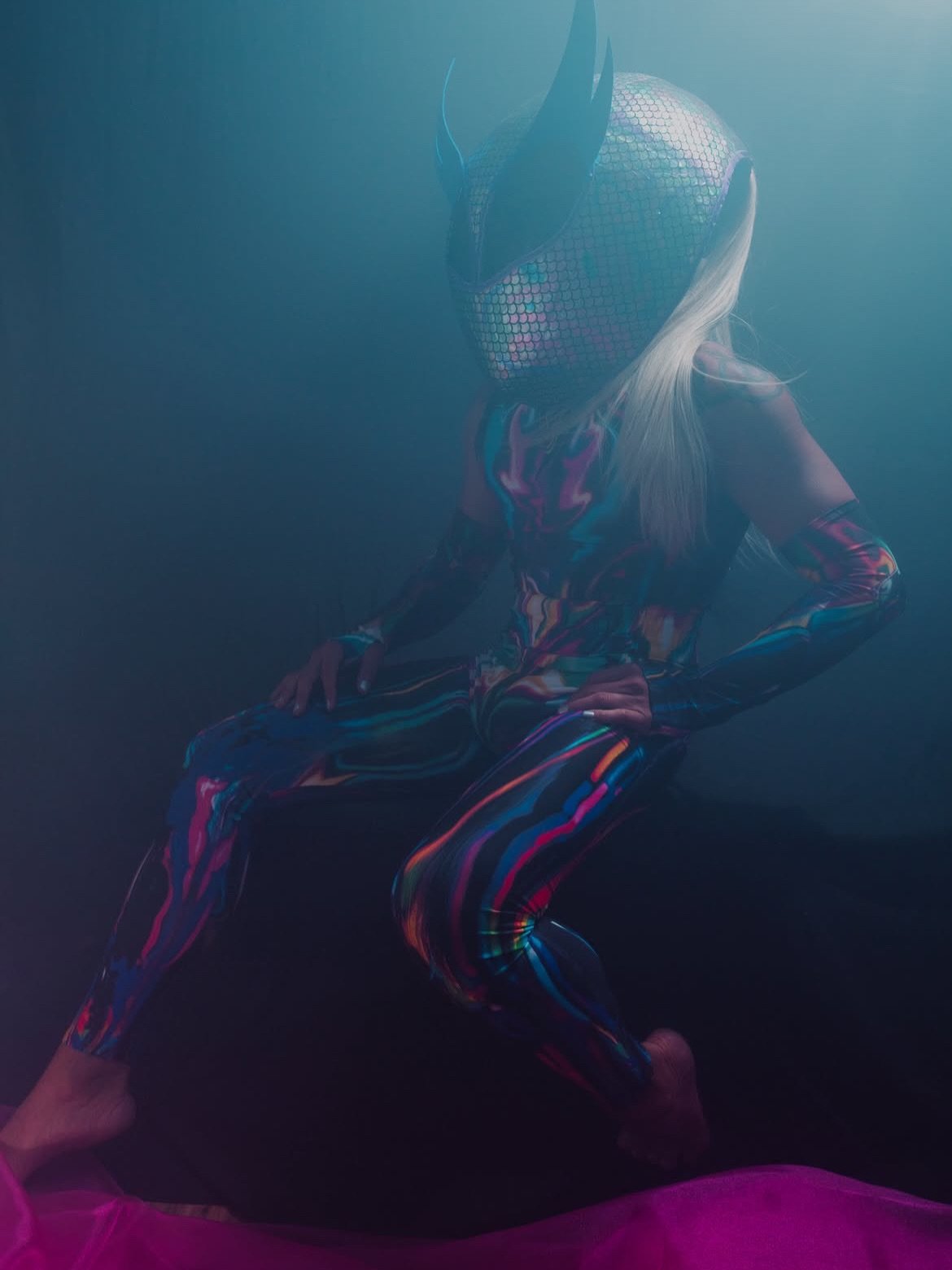
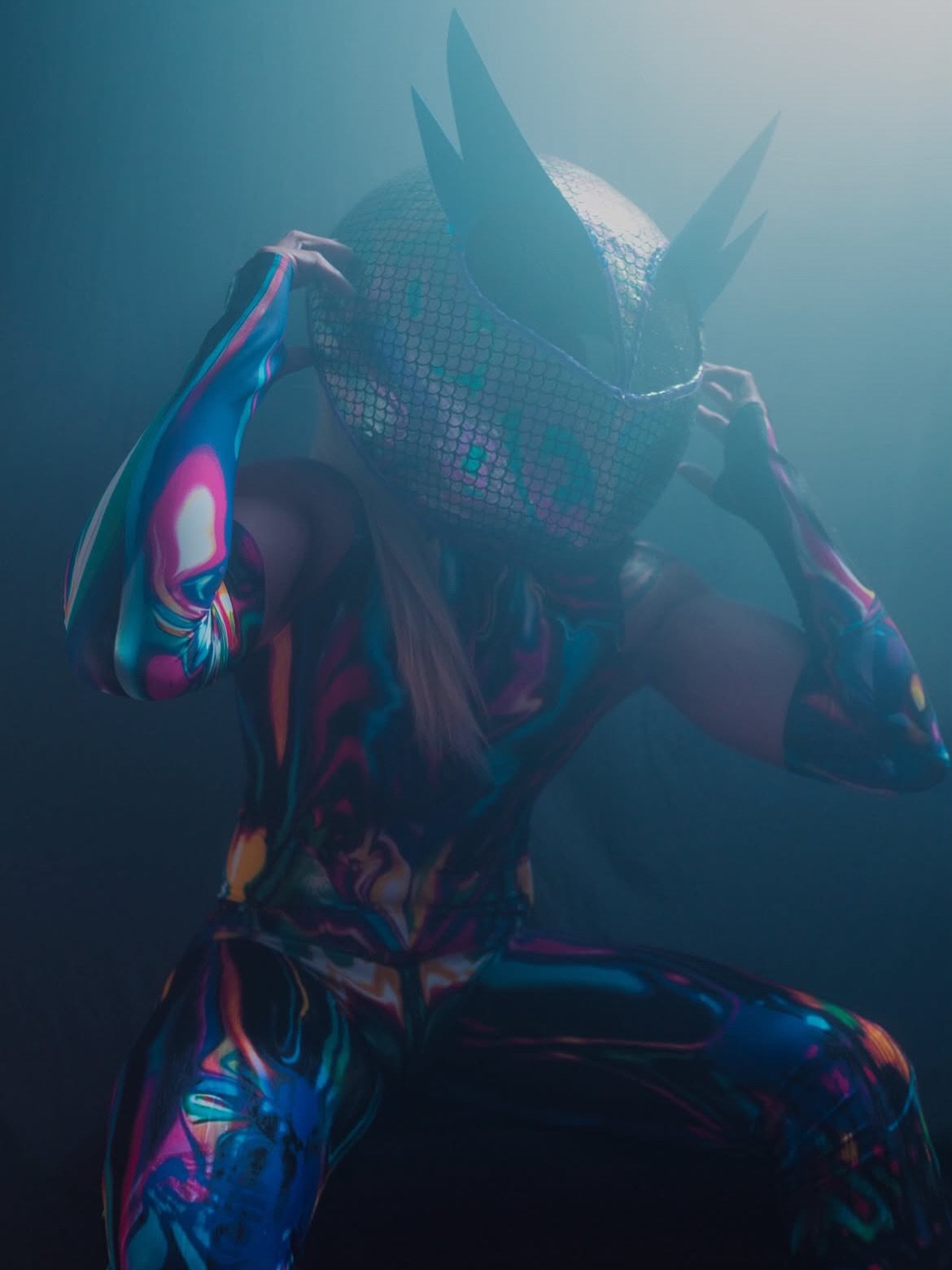
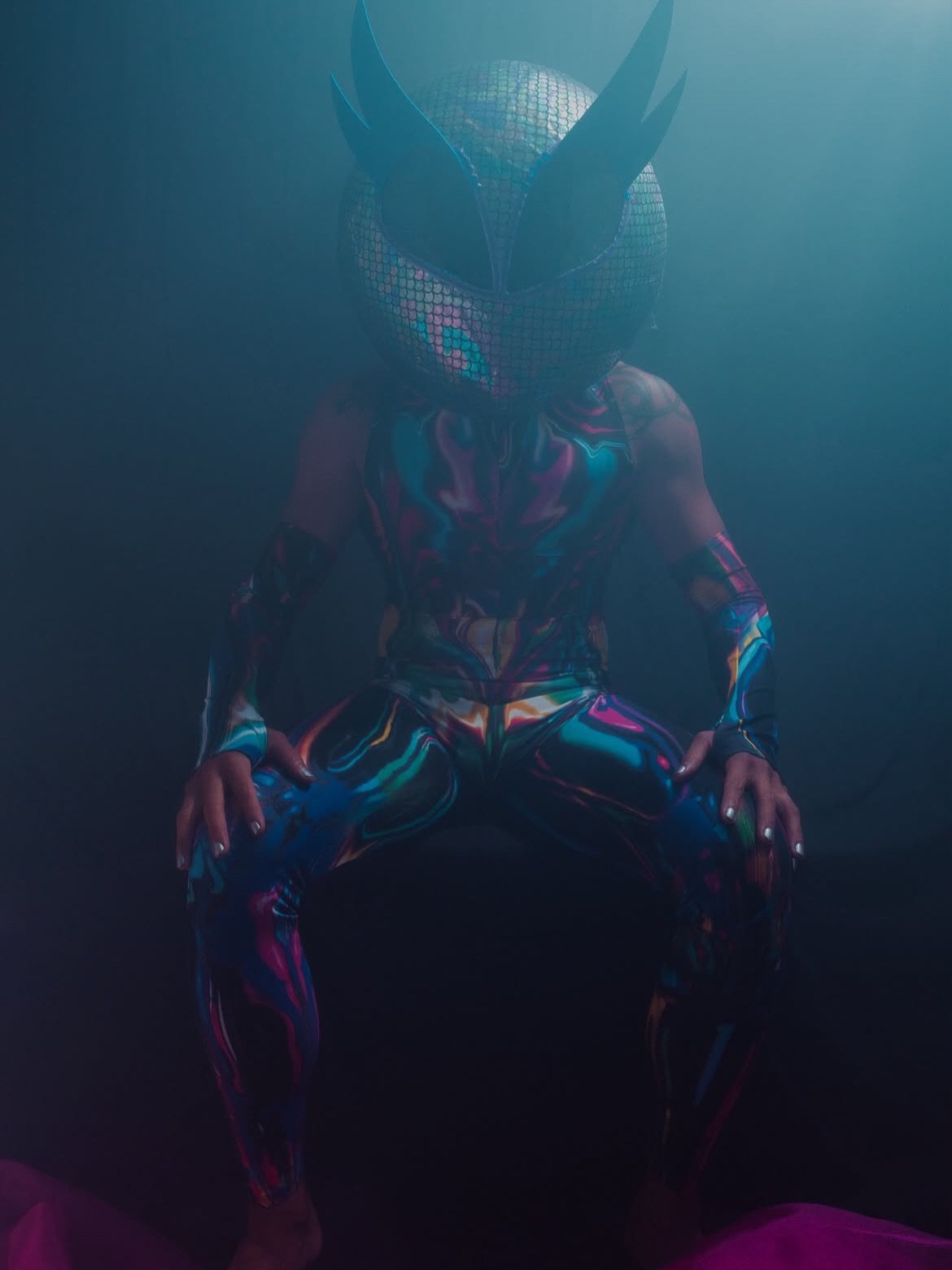
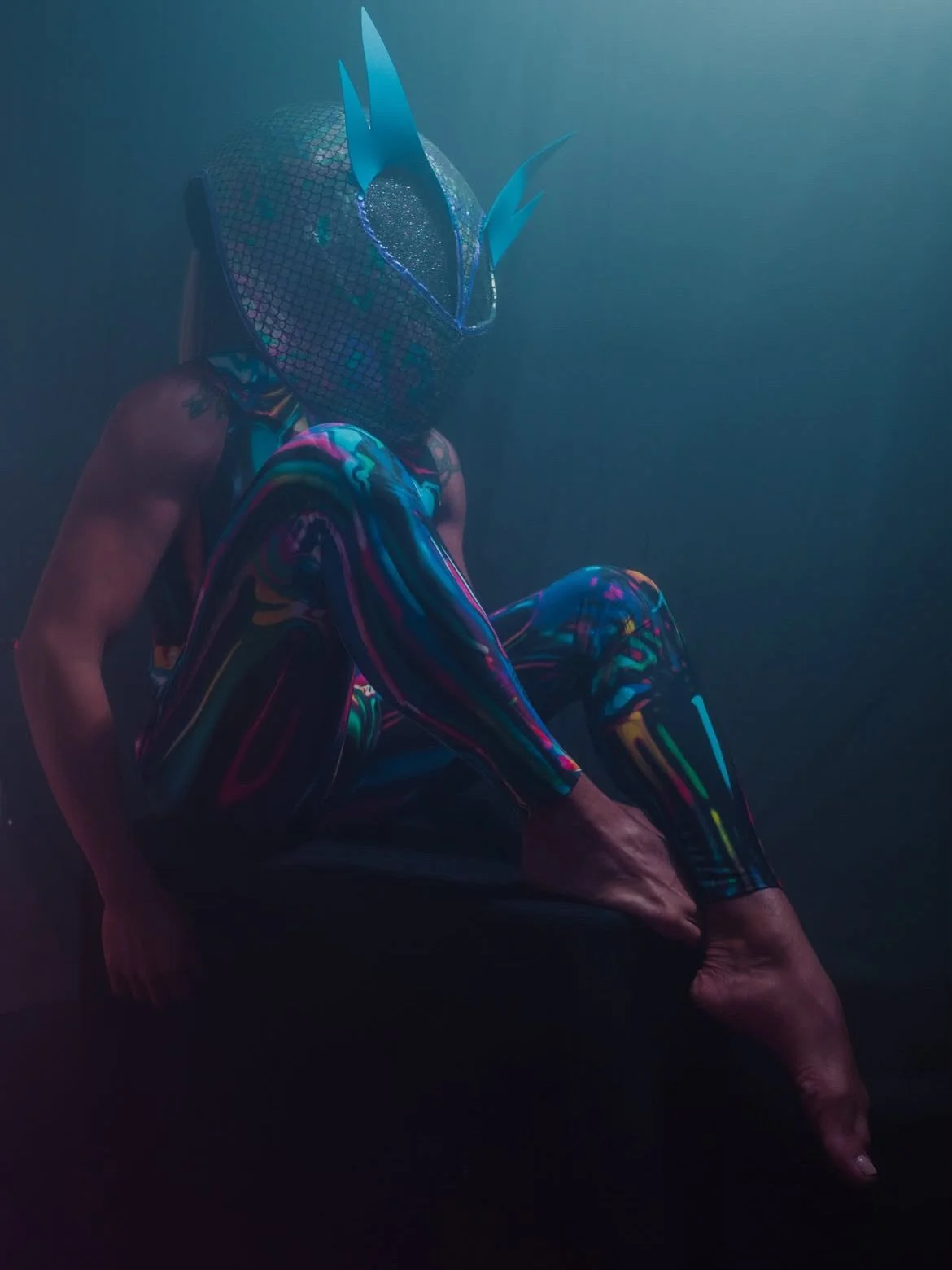
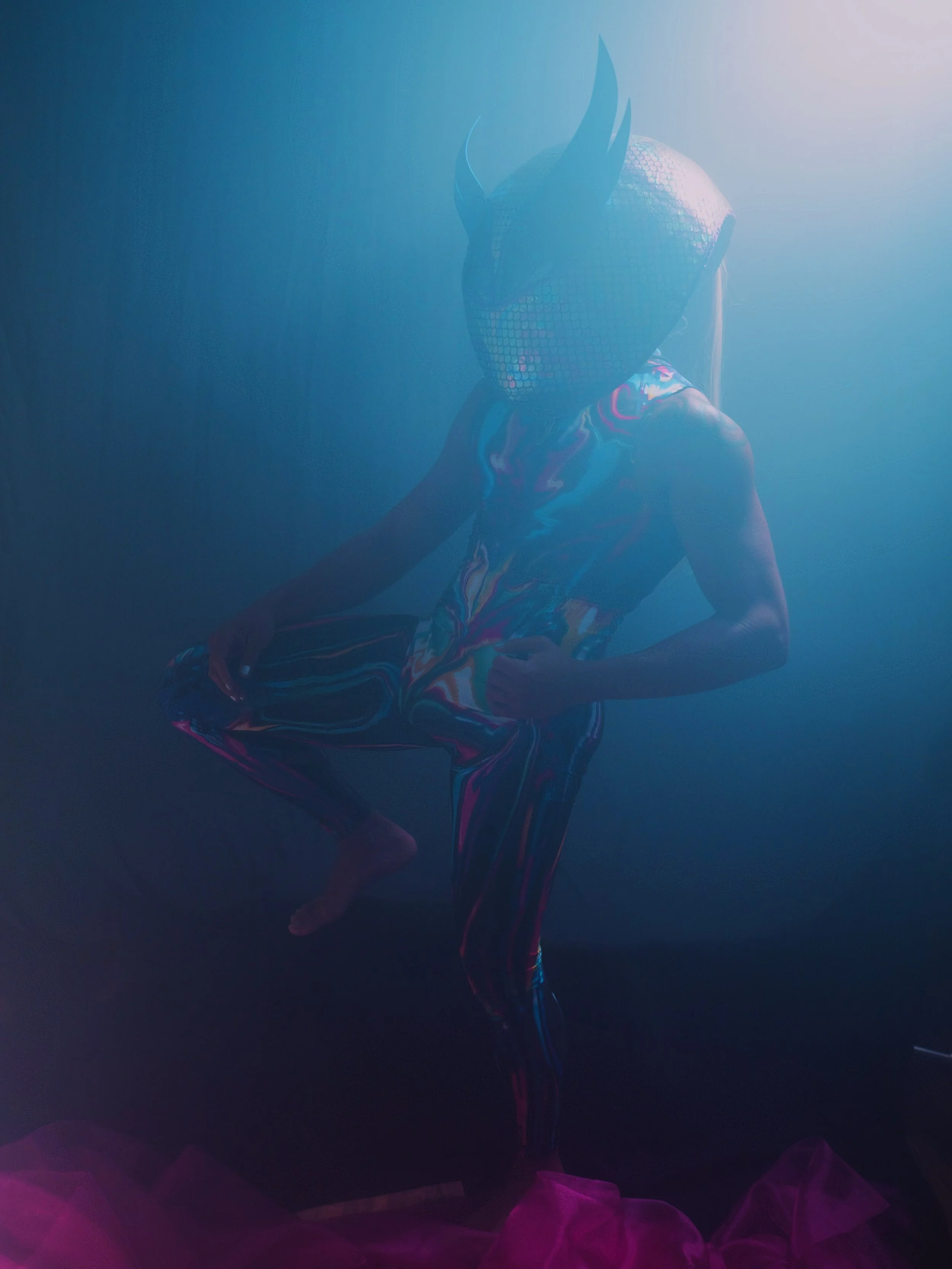
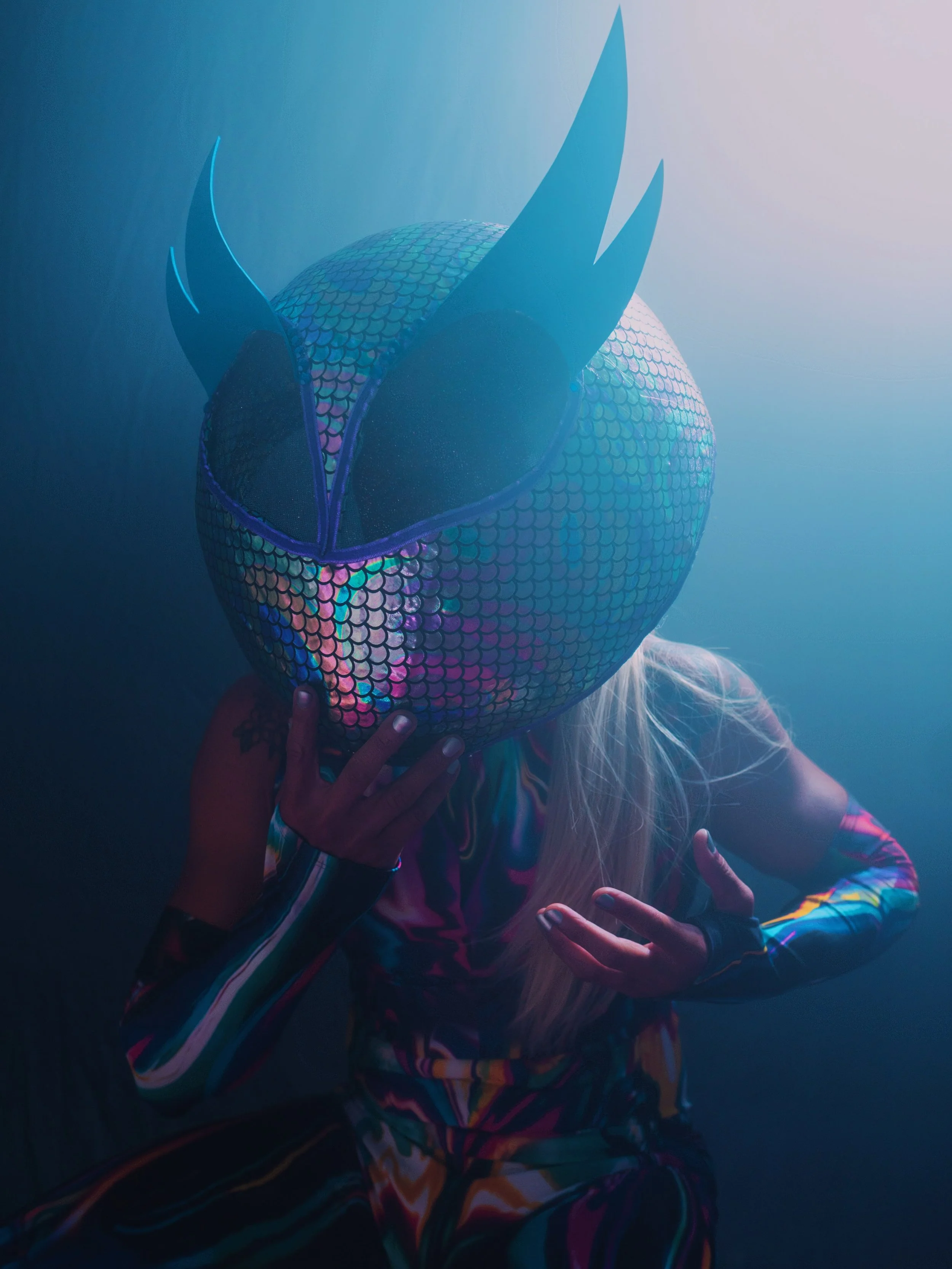
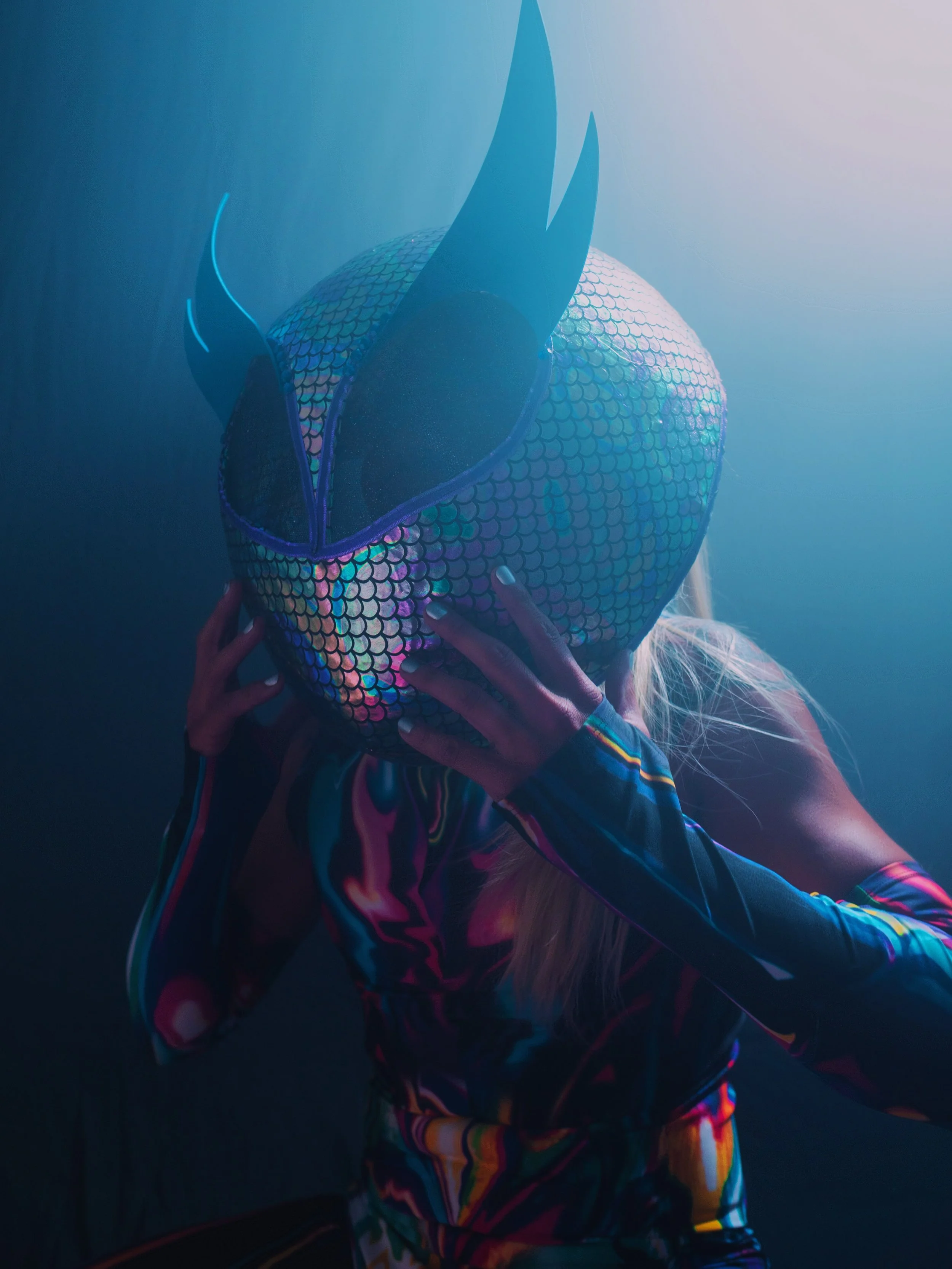
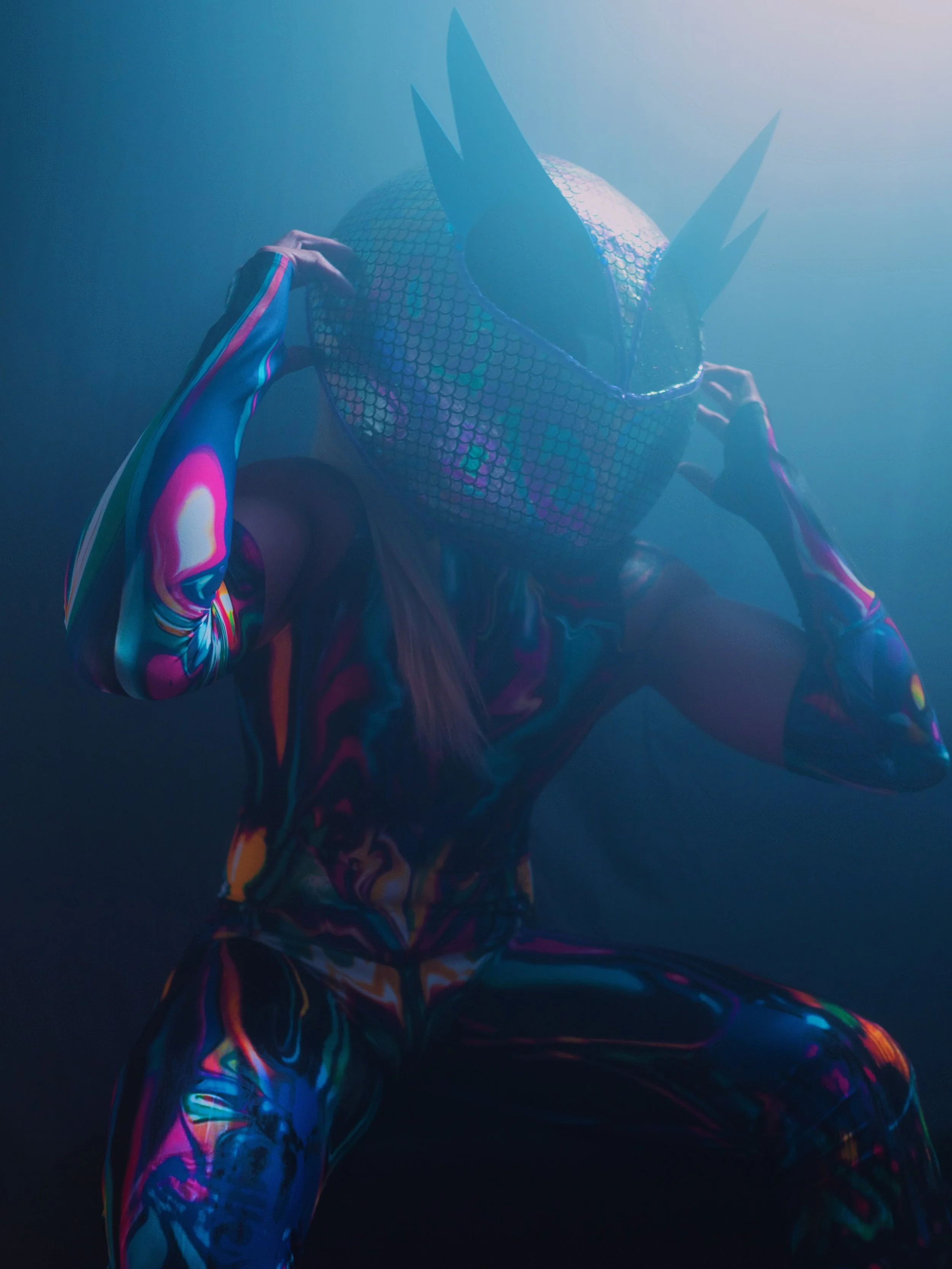
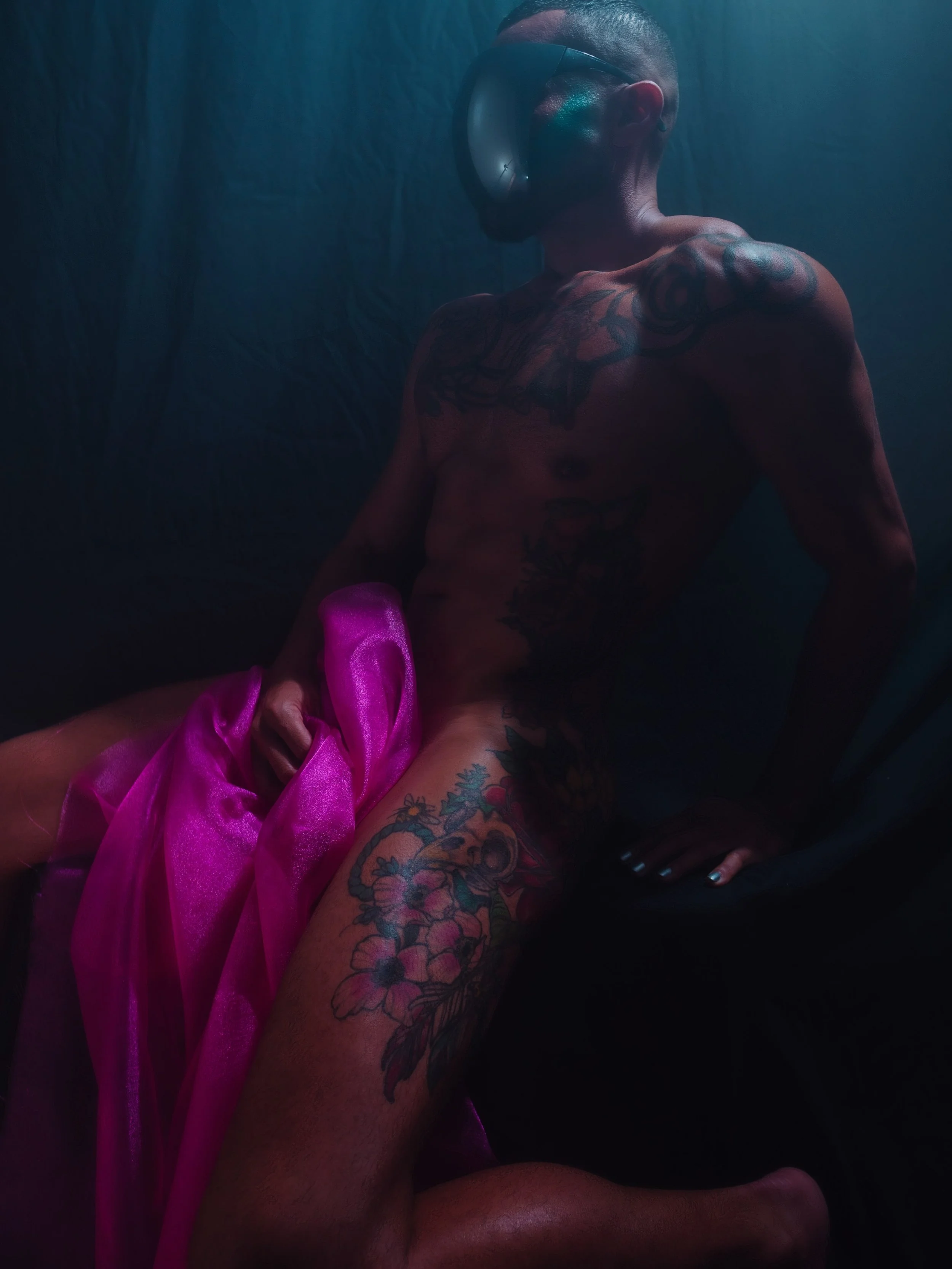
The experience begins with the photographic series created by Joel Nunez and Lolo Hartwood.
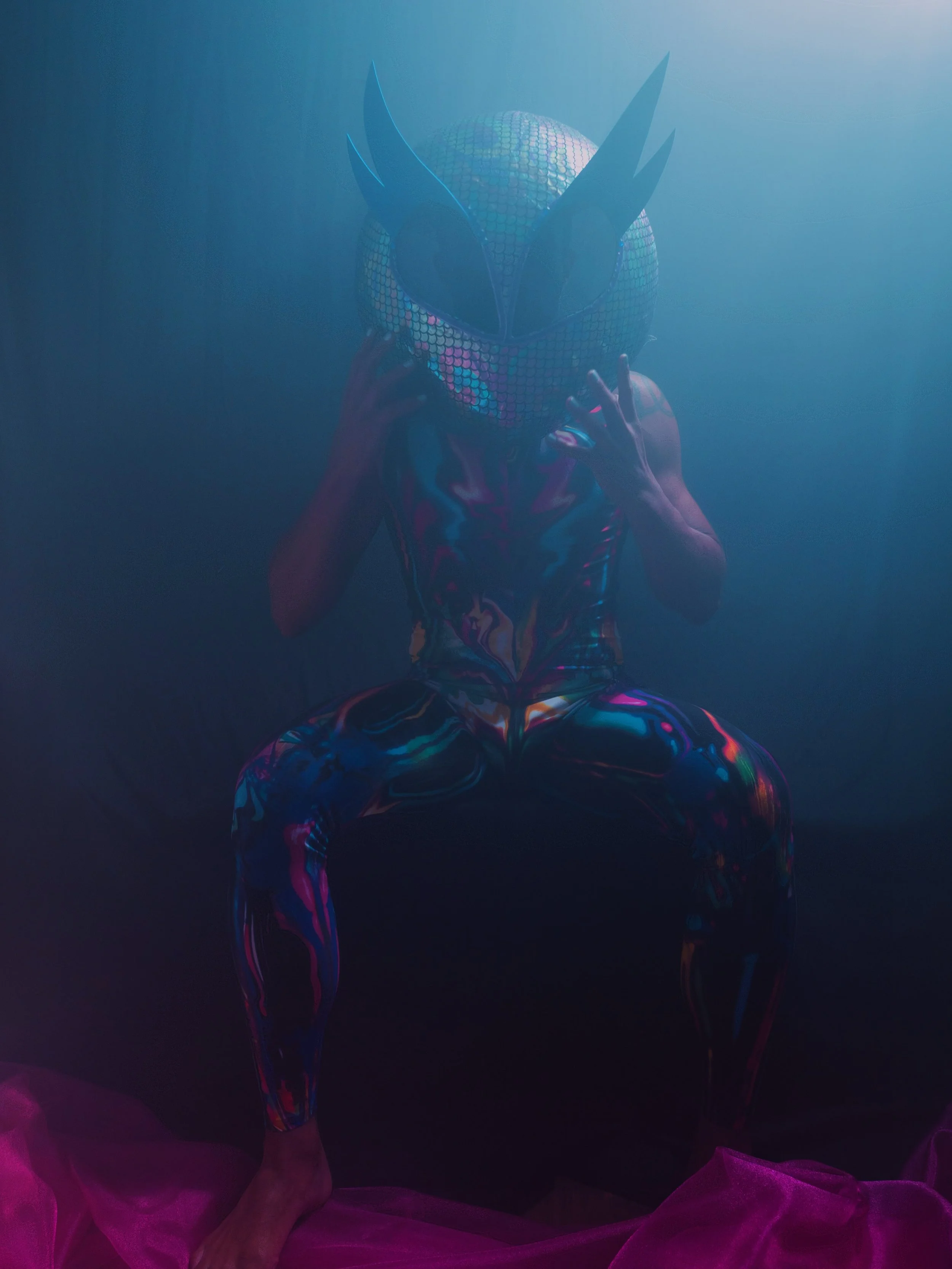
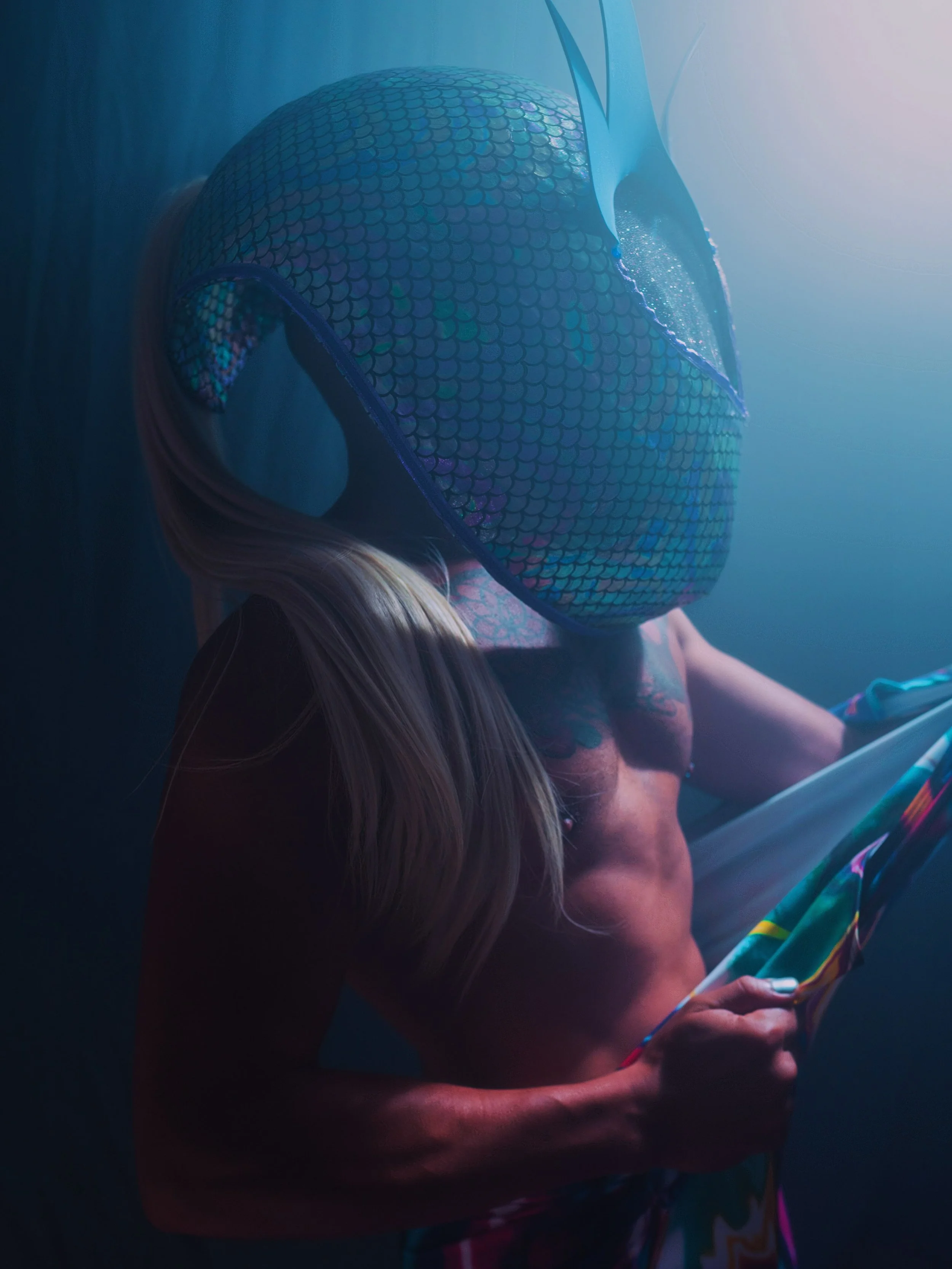
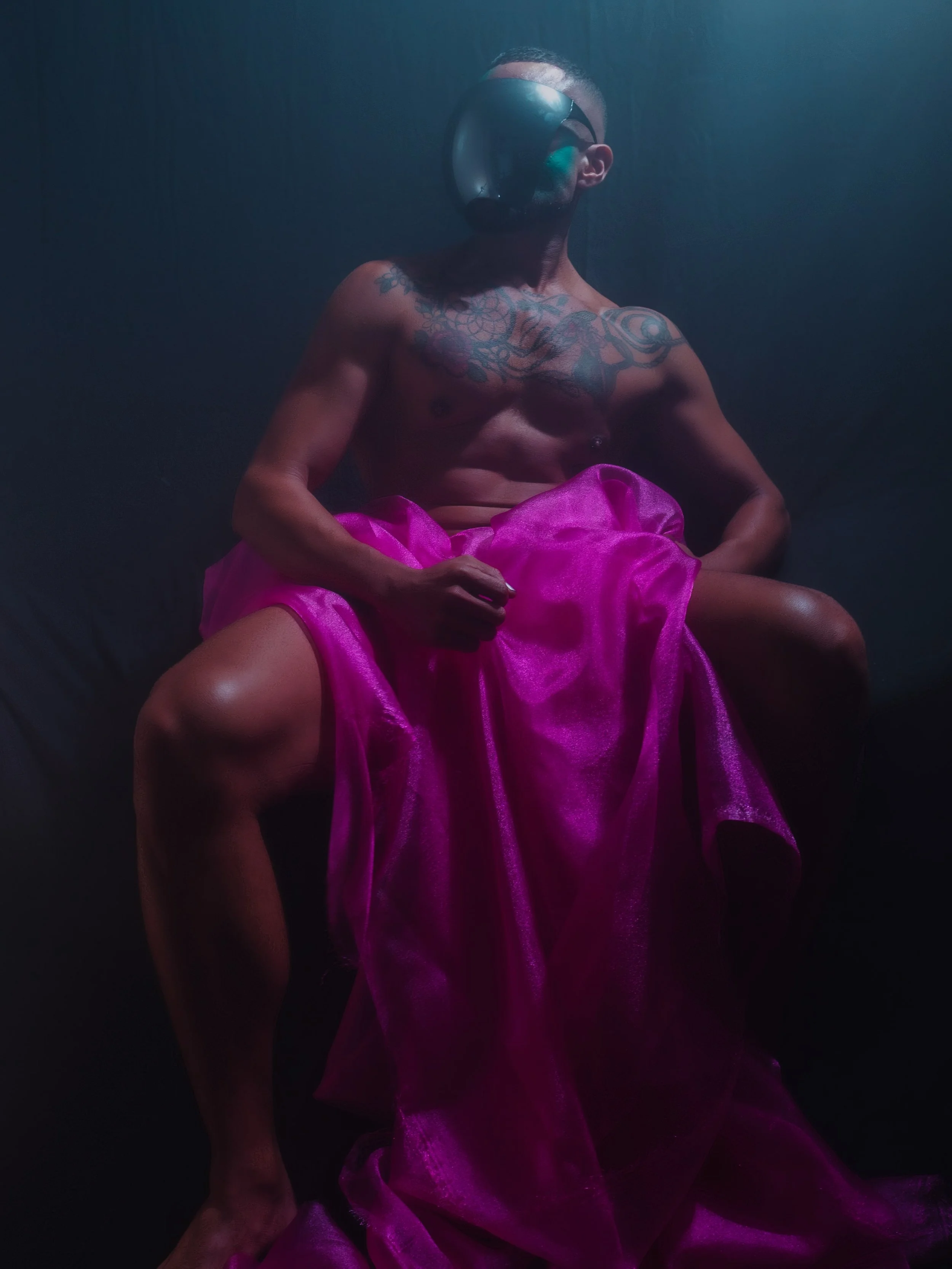
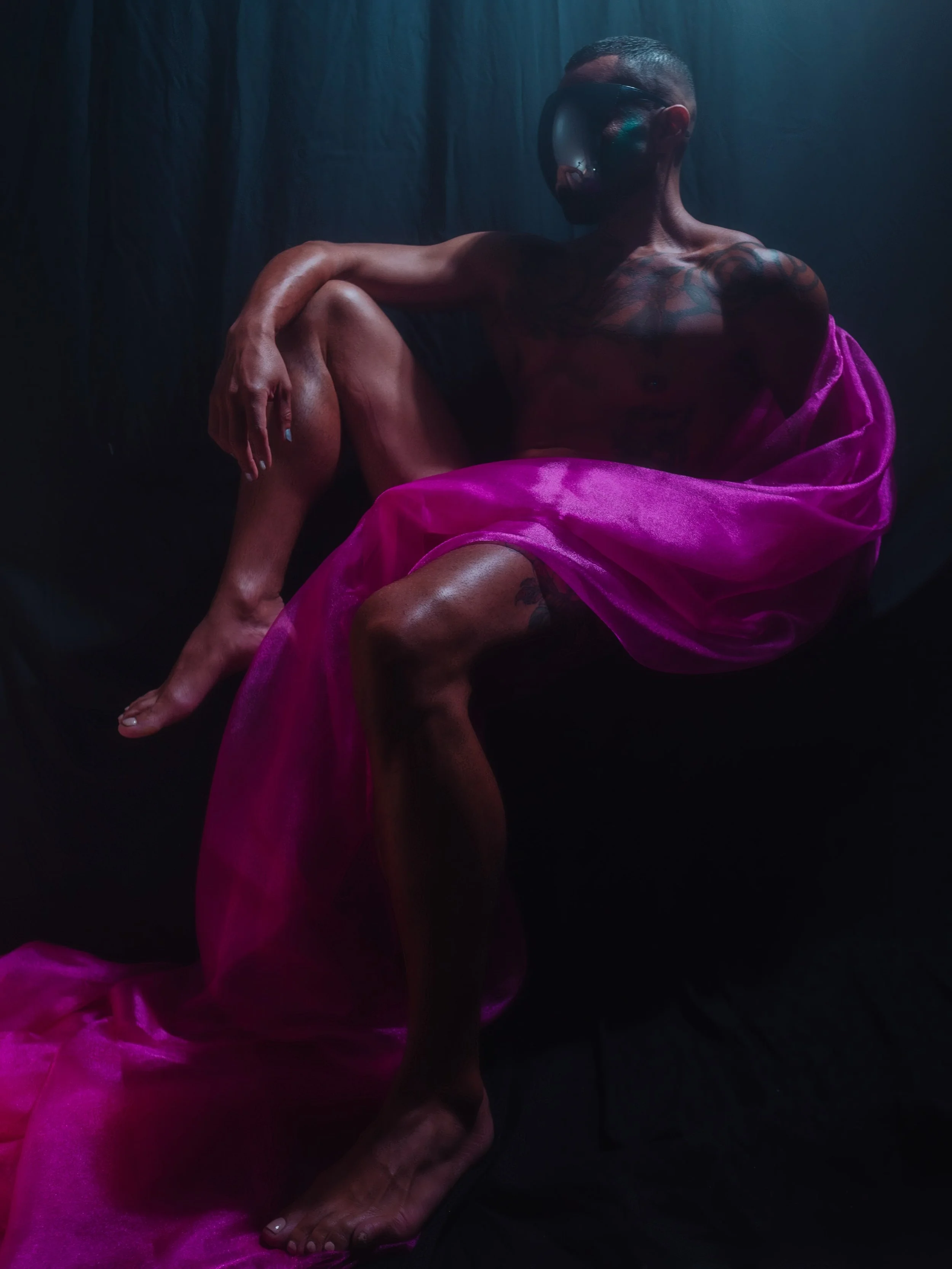
The images present the body in states of construction, transformation, shedding, exposure, and eventual revelation. Reptilian and alien forms deliberately complicate the idea of what is human. Fabric, costume, texture, skin, and nudity become visual metaphors for the identities we inhabit and eventually outgrow.
The creature is not intended simply as fantasy. It represents the constructed self: the version of ourselves assembled through adaptation. Human beings continually adjust themselves in response to their environments. We learn what parts of ourselves are rewarded, which parts create conflict, which parts attract love, and which parts should remain hidden. These adaptations can become so deeply embedded that what began as protection eventually begins to feel like identity.
The process of shedding therefore becomes psychologically ambiguous. Removing a layer can represent liberation, but it can also represent loss. There is vulnerability in discovering that something which once protected us no longer belongs to us. Transformation is rarely a clean progression from falsehood to authenticity. Sometimes we grieve the identities we leave behind because they helped us survive long enough to become someone else.
The photographs capture that transitional space. The exposed body at the end of the transformation is therefore not presented merely as erotic or nude. It represents a body from which the armor has been removed. It is not perfection that has been revealed. It is vulnerability.
THE REFLECTION — Distorted Mirrors
If the photographs ask the audience to witness another person’s transformation, the mirrors redirect that examination toward the viewer.
Throughout the installation, distorted mirrors interrupt the gallery space. The reflection is recognizable, yet altered. A body stretches. A face changes. Proportions become unfamiliar. The viewer understands intellectually that the mirror is distorting the image, yet there remains an instinctive impulse to examine the reflection as though it contains information about the self.
This contradiction becomes central to the psychology of Beneath the Skin.We rarely encounter ourselves directly. We encounter ourselves through reflections—literal and metaphorical.
We understand ourselves through families, lovers, rejection, praise, photographs, memory, culture, social expectations, and the imagined perception of other people. Each becomes a kind of mirror, and none is entirely objective. The distorted mirror makes that process physical. It asks: If the instrument through which you see yourself is distorted, how much can you trust the image it gives you? More importantly: How many distorted reflections have we mistaken for truth?
By introducing mirrors into the installation, the audience can no longer remain exclusively an observer. Their bodies enter the visual language of the exhibition. The work shifts from look at this transformation to where are you within it? The viewer becomes, temporarily, both spectator and subject.


THE VOICE — Music
The final element is music.
If photography represents the body and the mirrors represent perception, the music represents the internal voice. Performed live by Lolo Hartwood, the original songs from the Beneath the Skin EP move beyond the exterior transformation depicted in the photographs and enter its emotional interior. The songs explore longing, abandonment, grief, self-discovery, love, memory, childhood, and the continuing process of becoming.
This progression is intentional. A photograph allows the audience to look. A mirror forces them to see themselves. Music asks them to feel. The concert therefore does not function as entertainment following an exhibition. It is the emotional culmination of the installation. Ideas that have previously existed through image and reflection acquire language, melody, breath, and a human voice. The transformation becomes audible.

BENEATH THE SKIN
Together, these three mediums create a movement from external observation toward internal recognition.
Body → Reflection → Voice.
The audience first encounters someone else’s transformation. Then they encounter their own image. Finally, they encounter the emotional world beneath both.
At the center of the work is the belief that identity is not something we uncover once and permanently possess. We are continually constructing, protecting, questioning, shedding, grieving, and rebuilding ourselves. The title Beneath the Skin therefore does not suggest that somewhere underneath our exterior exists a single, untouched “true self” waiting to be discovered. The proposition is more complicated.
Perhaps the self is composed of everything we have carried: the wounds, the defenses, the people we loved, the identities we performed, the things we lost, the child we once were, and the person we are still becoming. The goal is not to erase those layers. It is to recognize them. And beneath those layers—beneath the scars, beneath the armor, beneath the identities we have constructed—the work continually returns to one idea: Beneath the skin lives love.
That idea ultimately connects the installation to the personal philosophy at the center of Lolo Hartwood’s work: Live Love. Not love as sentimentality, but love as an act of recognition—the willingness to see ourselves without turning away. The photographs expose the body. The mirrors destabilize the reflection. The music gives the interior a voice. And somewhere between those three experiences, Beneath the Skin asks the audience to consider not simply who they see—but who remains when they are no longer performing themselves for the world.